
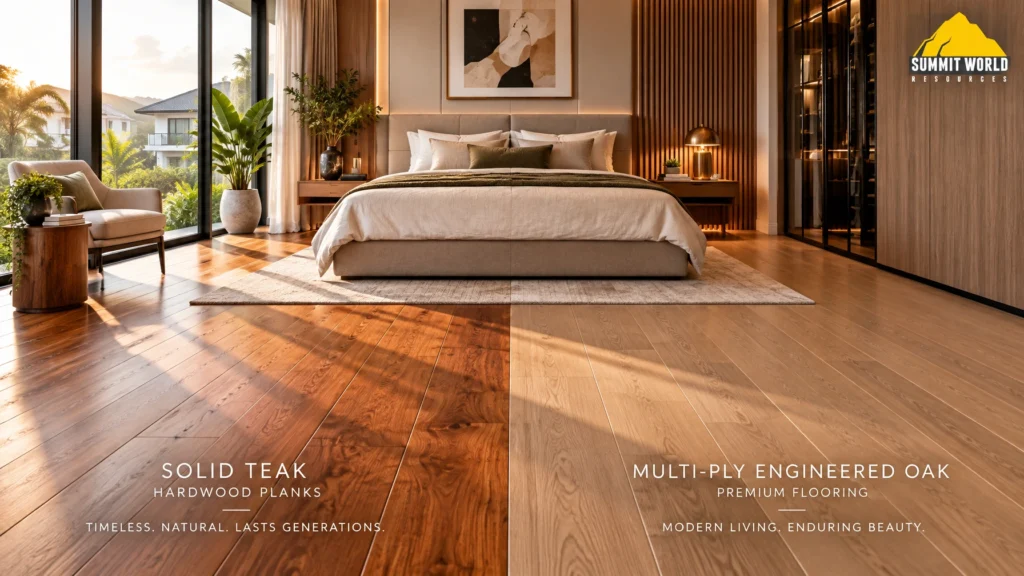
When upgrading your home interior in Malaysia, choosing the right flooring material is one of the most critical decisions you will make. Flooring covers the largest physical surface area of your living space. It sets the architectural tone for your entire home while taking the brunt of daily foot traffic, furniture weight, and environmental exposure.
For decades, wood floors have remained the gold standard of architectural elegance. However, walking into a showroom can quickly become overwhelming with technical terms. Homeowners routinely find themselves comparing engineered wood vs solid hardwood alongside high-performance synthetic options like waterproof laminate and stone composite vinyl.
Which real timber floor is truly best for your property? How do engineered structures handle Malaysia’s humid tropical climate compared to traditional solid wood planks? In this definitive buyer’s guide, the technical team at Summit World Resources Flooring provides an in-depth breakdown of engineered wood vs solid hardwood, comparing structural composition, cost, durability, climate performance, and aesthetic appeal.
Engineered Wood vs Solid Hardwood: Understanding the Core Differences
To choose the best floor for your home renovation, you must first understand how each material is constructed. While solid timber and engineered planks may look identical from the surface once installed, their internal engineering differs dramatically.
Many homeowners who visit Summit World’s physical showroom initially assume that all wooden floors are processed the same way. In reality, understanding the structural differences in engineered wood vs solid hardwood is essential for making a long-term investment that survives local tropical conditions.
What is Solid Hardwood Flooring?
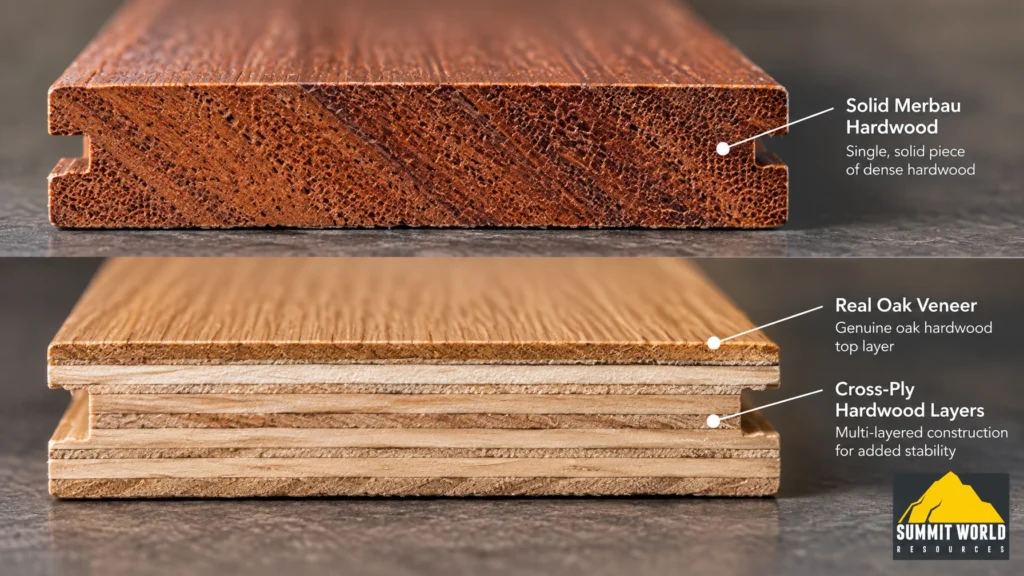
Solid hardwood flooring is the original, traditional wood floor system. Each plank is precision milled from a single, continuous piece of harvested natural timber, such as Burmese Teak, Merbau, American White Oak, or Walnut.
Structural Characteristics of Solid Hardwood
- Single-Piece Construction: Made entirely of solid wood from top to bottom, typically between 15mm to 18mm thick.
- Refinishing Capability: Because the plank is solid wood throughout, it can be sanded down, re-ground, and re-varnished multiple times over several decades.
- Organic Grain Variety: No two planks are identical, giving your home a unique, bespoke visual grain pattern.
Pros of Solid Hardwood in Malaysian Homes
- Unrivaled Prestige: Solid hardwood adds immediate resale value and luxury appeal to high-end residential bungalows and executive offices.
- Lifetime Longevity: When properly maintained, a solid timber floor can easily last over 50 years.
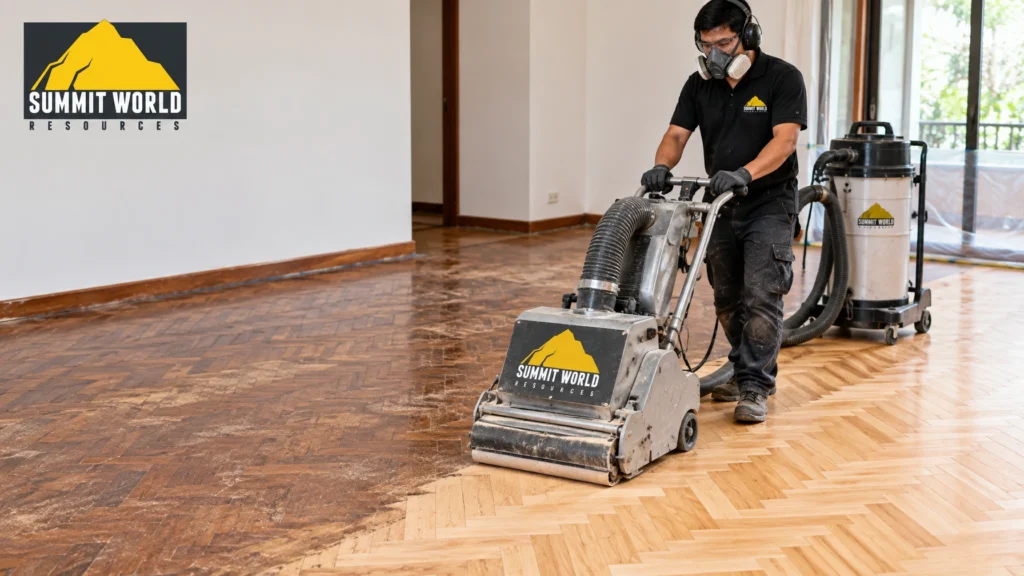
- Infinite Restoration: If the surface develops scratches after a decade of heavy use, homeowners can engage professional timber floor grinding and varnishing services to fully restore the floor.
Cons of Solid Hardwood in Malaysian Homes
- Higher Price Point: Milled from mature hardwood trees, solid timber represents a premium financial investment.
- Susceptibility to Humidity: Natural solid timber expands and contracts significantly when exposed to moisture fluctuations in tropical climates.
- Lengthier Installation: Requires specialized subfloor joist preparation, acclimatization time on site, and careful installation skills.
What is Engineered Wood Flooring?
Engineered wood flooring was developed to solve the natural instability of solid timber while preserving 100% of its genuine wood beauty. An engineered plank is not synthetic; it is made entirely of real wood components engineered in cross-directional layers.
When weighing engineered wood vs solid hardwood, understanding this layered construction reveals why engineered planks perform exceptionally well in humid Asian climates.
Structural Layers of Engineered Wood
- The Real Wood Top Veneer: The top visible surface layer consists of genuine solid hardwood, such as European Oak, Walnut, or Teak, usually ranging from 2mm to 6mm in thickness.
- The Multi-Ply Core: Beneath the real wood veneer lie multiple layers of core plywood or plantation hardwood laid in alternating cross-directional grains.
- The Stabilizing Backing Layer: A final bottom wood sheet seals the plank, preventing moisture absorption from the subfloor beneath.
Pros of Engineered Wood in Malaysian Homes
- Superior Dimensional Stability: The cross-ply core counteracts wood’s natural urge to expand and warp during humid monsoon seasons.
- 100% Real Wood Surface: Because the top layer is genuine hardwood, it looks, feels, and sounds identical to solid timber underfoot.
- Easier Installation Methods: Engineered planks can be installed using click-lock or tongue-and-groove glue-down methods over flat concrete screeds.
- Resource Efficient: A single mature oak tree yields significantly more engineered planks than solid hardwood planks, making it an eco-conscious selection. For a deeper look into eco-friendly building practices, home renovators can read our guide on eco-friendly flooring in Malaysia.
Cons of Engineered Wood in Malaysian Homes
- Limited Sanding Cycles: Depending on the thickness of the top real wood veneer, engineered planks can usually only be sanded and refinished one to three times during their lifespan.
- Quality Varies by Manufacturer: Low-quality engineered floors using cheap adhesives can delaminate over time. Always purchase from trusted specialists.
Where Does Waterproof Laminate Fit In?
While solid hardwood and engineered timber represent real natural wood, many homeowners also evaluate laminate options during their search for wood flooring in Malaysia.
Laminate flooring features a photographic high-definition wood print layer sealed over a High-Density Fiberboard (HDF) or Compact Density Fiberboard (CDF) core. Modern technologies have introduced high-performance waterproof laminate Malaysia options, such as WPL Aqua Block series.
Comparing Laminate Against Real Wood:
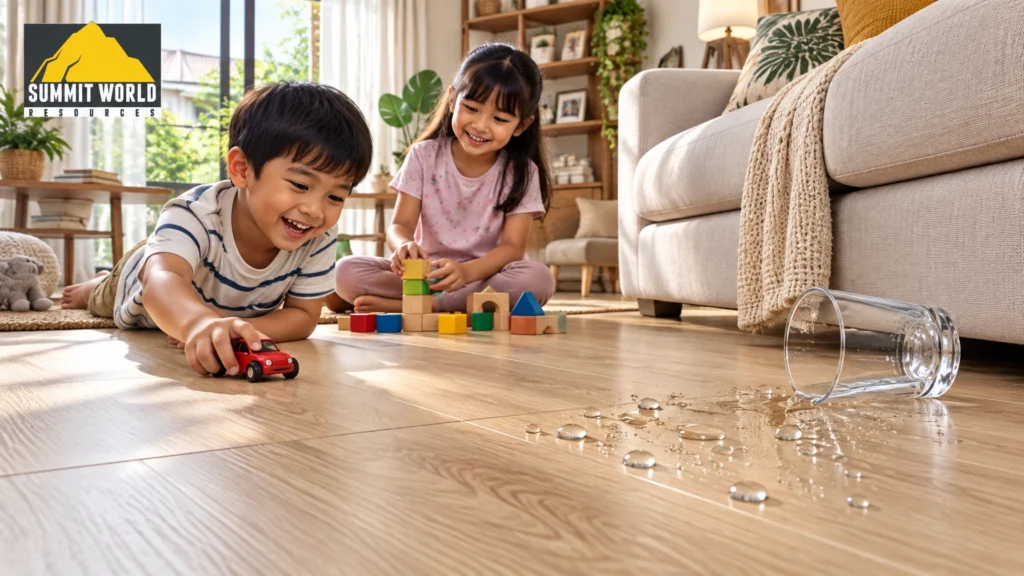
- Water Resistance: High-grade waterproof laminate offers superior surface water defense compared to solid hardwood.
- Scratch Resistance: Laminate’s aluminum oxide wear layer resists pet claws and heavy furniture dragging better than natural wood coatings.
- Price Accessibility: Laminate offers an attractive entry-level cost for budget-conscious home renovations.
- Aesthetic Feel: While modern printing looks realistic, laminate lacks the authentic underfoot warmth and organic grain depth of genuine engineered wood or solid hardwood.
Comprehensive Technical Comparison Table
To help you quickly evaluate engineered wood vs solid hardwood alongside waterproof laminate, the comparative table below outlines essential performance metrics for Malaysian property owners.
Quick Comparison: Engineered Wood vs Solid Hardwood at a Glance
| Performance Metric | Solid Hardwood Flooring | Engineered Wood Flooring | Waterproof Laminate (WPL) |
| Surface Material | 100% Solid Natural Timber | Genuine Hardwood Veneer | HD Printed Wood Pattern |
| Core Construction | Single Milled Wood Block | Multi-Ply Cross-Directional Wood | High-Density Fiberboard (HDF) |
| Humidity & Heat Stability | Low to Moderate | High (Engineered Stability) | High (Moisture Treated) |
| Water Resistance | Low (Spills must be wiped) | Moderate (Requires care) | High (Waterproof Joint Systems) |
| Sanding & Refinishing | Multiple Times (3 to 5+ times) | Limited (1 to 3 times) | Cannot Be Sanded |
| Termite Susceptibility | Requires Pre-Treatment | Requires Pre-Treatment | High Resistance (Resin Treated) |
| Installation Method | Nail-down / Glue-down | Glue-down / Floating Click | Floating Click System |
| Resale Property Value | Maximum Premium Equity | High Luxury Appeal | Moderate Value Addition |
Detailed Head-to-Head Analysis: Key Buyer Criteria
To ensure your choice aligns perfectly with your home environment, let us analyze how these materials compare across the five most critical purchasing factors.
1. Moisture & Climate Resistance: Engineered Wood vs Solid Hardwood in Malaysia
In high-humidity environments like Klang Valley, evaluating engineered wood vs solid hardwood is essential because solid timber responds rapidly to indoor moisture fluctuations.
Malaysia’s tropical climate presents constant humidity variations. Solid hardwood naturally absorbs moisture from the air, causing individual boards to expand slightly during wet months and shrink during dry spells. If subfloor ventilation is poor, solid timber can cup or warp over time.
In contrast, the alternating core layers of engineered wood neutralize this mechanical movement. When evaluating engineered wood vs solid hardwood strictly for tropical climate stability, engineered wood wins convincingly. Its cross-ply structure resists swelling, making it suitable for air-conditioned bedrooms and living rooms where temperature fluctuations occur daily.
2. Maintenance and Restoration Potential
When comparing engineered wood vs solid hardwood maintenance requirements, both require similar protective care, though solid planks offer unlimited sanding cycles.
If you view your home makeover as a multi-generational investment, solid hardwood holds a distinct advantage. If your solid timber floor gets scratched by pets or worn down by heavy foot traffic over fifteen years, you do not need to replace the floor. Professional sanding removes the top damaged millimeter, allowing fresh varnish to restore the original luster.
Engineered wood with a thick veneer (4mm to 6mm) can also be sanded and refinished up to three times. However, thinner engineered planks (1mm to 2mm veneer) cannot tolerate heavy sanding. For long-term restorability, solid hardwood retains top honors.
3. Installation Speed and Versatility
Another key factor in engineered wood vs solid hardwood installations is subfloor compatibility and the choice between floating click systems and direct adhesion.
Installing solid timber requires extensive timber acclimatization on site, subfloor waterproofing membranes, and skilled carpentry labor. It is a meticulous craft that takes time.
Engineered wood offers far greater installation flexibility. It can be installed as a floating floor over acoustic underlayments or glued directly to flat concrete subfloors. Furthermore, for condominium owners seeking fast, low-noise renovations without disturbing neighbors, exploring zero hacking flooring Malaysia overlay solutions using engineered planks or rigid SPC vinyl provides an exceptional fast-track alternative.
4. Acoustic Comfort and Underfoot Feeling
Walking barefoot on genuine wood provides a psychological warmth and tactile comfort that synthetic tiles cannot match. Both solid timber and engineered wood absorb sound waves naturally, reducing hollow echoes in open-concept living rooms. Solid hardwood offers a slightly denser, firmer sound underfoot, while engineered wood paired with high-density IXPE foam underlayment provides a pleasantly cushioned feel.
5. Long-Term Value: Engineered Wood vs Solid Hardwood Return on Investment
While solid hardwood commands a higher upfront cost, it delivers maximum equity value for high-end residential properties. Home buyers in luxury markets recognize the value of solid Teak or Merbau floors.
Engineered wood provides a sweet spot for discerning homeowners, offering the exact visual luxury of solid timber at a more accessible price point per square foot. For detailed answers regarding material pricing and project estimates, homeowners can explore our comprehensive flooring FAQs knowledge base.
Which Material Should You Choose for Your Project?
Ultimately, deciding on engineered wood vs solid hardwood depends on your property type, budget, and climate considerations.
Choose Solid Hardwood Flooring If:
- You are building or renovating a luxury landed bungalow, semi-detached house, or high-end penthouse.
- You view your flooring as a permanent, multi-generational investment that will be refinished decades later.
- You demand 100% thick natural timber through the full depth of every plank.
- You are installing flooring primarily in dry, climate-controlled rooms like master suites or private libraries.
Choose Engineered Wood Flooring If:
- You want the authentic look, feel, and prestige of 100% real timber without the risk of tropical warping.
- You are renovating an apartment, condominium, or landed property with concrete subfloors.
- You prefer a faster installation process with floating click or direct glue-down options.
- You seek an eco-conscious real wood product that maximizes natural timber resources efficiently.
Choose Waterproof Laminate Flooring If:
- You are renovating on a strict budget but want an attractive timber aesthetic.
- You have active indoor pets or young children who frequently drop toys and spill liquids.
- You require maximum scratch resistance for high-traffic commercial spaces or rental properties.
Why Buy Your Timber Flooring from Summit World Resources Flooring?
Selecting between engineered wood vs solid hardwood requires expert advice tailored to your property’s specific subfloor conditions, light exposure, and budget.
Based in Subang Jaya, Selangor, Summit World Resources Flooring (SWHOM SDN BHD) is Malaysia’s highly trusted timber and wooden flooring specialist by many. With over 15 years of industry experience, the master installers have successfully transformed thousands of homes and commercial venues across the Klang Valley and nationwide.
Here is why property owners consistently choose Summit World:
- Massive Installation Record: Over 2.5 million square feet of high-grade timber, engineered wood, SPC, laminate, and outdoor decking expertly installed.
- Premium Timber Sourcing: Summit World offers top-grade solid hardwood species alongside precision-engineered oak planks finished in rich, contemporary stains.
- Award-Winning Excellence: Recognized as the Reader’s Digest Trusted Brand Gold Winner 2024, winner of the Brand Leadership Flooring Solutions Award 2026, and named Best Timber Flooring Specialist by APAC Insider.
- Complete One-Stop Service: From complimentary site measurements and subfloor testing to supply, precision installation, and timber restoration, Summit World handles your project seamlessly.
- 5-Star Customer Rating: Hundreds of glowing reviews online praise Summit World’s pricing transparency, rapid execution, zero hidden fees, and neat site cleanup.
Visit The Showroom to Experience Real Wood Flooring
Nothing compares to feeling the physical texture and observing the organic warmth of real timber flooring in person. Summit World invites you to inspect the extensive material displays at the Summit USJ flooring showroom located inside The Summit USJ Mall in Subang Jaya, Selangor.
Summit World’s dedicated flooring specialists will help you analyze samples, compare cross-section engineered cores, and select the perfect shade for your home.
Frequently Asked Questions (FAQs)
1. Does engineered wood look fake compared to solid hardwood?
No. The surface layer of engineered wood is 100% real natural hardwood. Once installed on your floor, it is visually impossible to distinguish engineered wood from solid hardwood because the visible surface is genuine timber.
2. How many times can engineered wood flooring be sanded?
That depends on the thickness of the top real wood wear layer. An engineered plank with a 3mm to 4mm real wood veneer can typically be sanded and refinished 1 to 2 times. Planks with thicker 6mm veneers can be refinished up to 3 times.
3. Can engineered wood be installed over existing ceramic tiles?
Yes. Provided the existing tile subfloor is flat, structurally firm, and clean, engineered wood can be installed over tiles using floating click underlayment or specialized polyurethane flooring adhesives.
4. Are solid hardwood floors termite-proof in Malaysia?
Natural wood is not inherently immune to termites. However, solid timber supplied by Summit World can be treated with anti-termite wood preservatives during subfloor preparation. For areas with severe termite risks, 99.99% termite-proof options like rigid SPC vinyl are also available.
5. What is the average lifespan of engineered wood flooring?
High-quality engineered wood flooring installed by certified professionals typically lasts between 25 and 40 years with standard residential care and proper indoor humidity maintenance.