
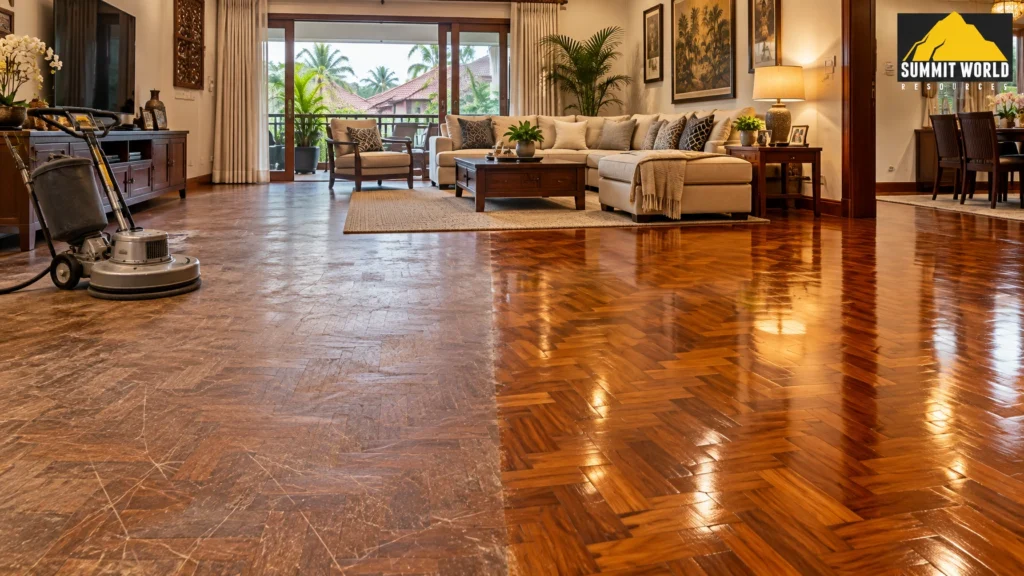
If your home or commercial space features solid timber or classic parquet flooring, you already possess one of the most valuable architectural features available in Malaysian real estate. Real wood floors bring unmatched warmth, natural grain beauty, and genuine prestige to any room.
However, over a decade of continuous foot traffic, moving heavy furniture, pet claws, exposure to tropical sunlight, and humidity can take a heavy toll. Scratches accumulate, the protective coat wears off, and the wood surface loses its vibrant luster, looking dull, faded, or yellowed.
When faced with tired-looking timber surfaces, many property owners assume their only option is to rip everything out and invest thousands of Ringgit in new flooring. Fortunately, that expensive demolition is rarely necessary. Professional floor grinding & varnishing allows you to strip away decades of surface wear, smooth out scratches, and apply fresh protective sealants to bring back showroom quality.
In this definitive guide, the restoration specialists at Summit World Resources Flooring explore everything you need to know about professional floor grinding & varnishing, including cost benefits, step-by-step sanding methods, varnish choices, and key maintenance guidelines.
Why Timber Floors Lose Their Luster in Malaysian Homes
Before diving into the restoration process, it helps to understand why solid wood and parquet floors degrade over time in tropical environments. Solid wood remains an organic material that continuously responds to its immediate surroundings.
1. Daily Foot Traffic and Surface Scratches
Constant walking in shoes, dragging chairs across rooms, and active pets create microscopic abrasions on the top varnish layer. Over time, these fine scratches trap dirt, causing bright timber floors to appear dark, cloudy, and worn out.
2. Tropical Sunlight and UV Discoloration
Malaysian homes often feature wide glass windows that invite abundant natural sunlight. While bright interiors are visually appealing, ultraviolet rays break down wood sealants and fade natural timber pigments over time.
3. Humidity and Minor Surface Moisture
High humidity levels across Klang Valley mean wood constantly absorbs and releases airborne moisture. Over many years, this natural movement can cause surface varnish coatings to crack, flake, or lose their moisture-sealing integrity.
Engaging a certified team to perform floor grinding & varnishing solves all these surface issues simultaneously, completely refreshing your living space without requiring structural demolition.
What is Floor Grinding & Varnishing?
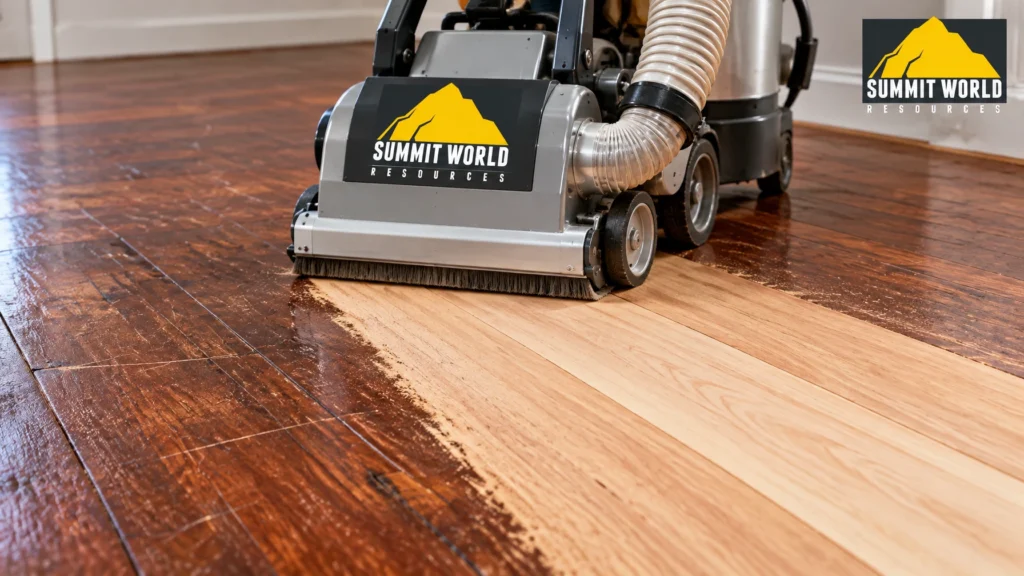
Professional floor grinding & varnishing is a comprehensive timber floor restoration process. Specialist floor sanding machines remove worn topcoats, dirty waxes, and damaged wood fibers, exposing a clean, raw, untouched wood layer beneath.
Once the raw timber surface is ground perfectly smooth, technicians apply multiple coats of high-performance polyurethane varnish or timber oils. This new coating seals the organic wood grain, protects against moisture ingress, and delivers a stunning gloss, satin, or matte appearance.
Property owners currently exploring options between new installations or full restorations can read our comprehensive analysis on engineered wood vs solid hardwood to understand how solid wood structures support multiple sanding cycles over their lifetime.
5 Signs Your Floor Needs Grinding & Varnishing (Not Replacement)
Replacing solid hardwood or vintage parquet floors can be extremely expensive and messy. In most cases, your existing wood foundation remains structurally sound under its worn surface.
Below are 5 clear signs that your property requires professional floor grinding & varnishing rather than full floor replacement:
- Surface Scratches and Scuffs: If scratches are limited to the top varnish and have not rotted the underlying wood slab, sanding will smooth away every mark.
- Faded or Yellowed Protective Coats: Old polyurethane coats naturally yellow or dull after 10 to 15 years. Grinding removes this discolored layer entirely.
- Bare Wood Exposure: High-traffic zones, such as hallways or entryways, where foot traffic has worn away the varnish completely require fresh sealing before raw wood absorbs liquid stains.
- Gaps Between Parquet Blocks: Over years of movement, vintage parquet blocks can develop small gaps. During professional floor grinding & varnishing, technicians fill these gaps using wood filler paste mixed with genuine wood sanding dust.
- Water Spot Stains: Minor water ring marks from spilled drinks or plant pots can be completely ground out, provided water has not rotted the subfloor foundation.
The Step-by-Step Floor Grinding & Varnishing Process at Summit World Resources Flooring
Achieving a flawless, smooth finish requires technical precision, commercial-grade machinery, and proper timing between varnish applications. A poorly executed DIY sanding job can leave deep gouges, uneven floor levels, or trapped dust bubbles in your varnish.
Here is how the expert restoration technicians at Summit World execute floor grinding & varnishing projects flawlessly:
Step 1: Comprehensive Site Inspection and Preparation
The team inspects your timber floor to identify loose parquet blocks, protruding nails, or severe moisture spots. Loose blocks are re-glued securely to concrete screeds, and nail heads are countersunk below the surface level.
Step 2: Heavy Coarse Floor Grinding
Using heavy-duty belt sanders fitted with coarse-grit sandpaper (typically 36 to 40 grit), technicians strip away old discolored varnish layers, wax build-up, and deep surface scratches. This step levels out minor board height variations.
Step 3: Medium and Fine Sanding Passes
The team makes multiple sanding passes, progressively switching to finer sandpaper grits (60, 80, and 120 grit). Each pass refines the surface texture, leaving your solid wood floor completely smooth to the touch.
Step 4: Gap Filling and Wood Putty Application
To ensure a continuous floor surface, technicians mix fine wood dust collected during sanding with specialized resin binders. This paste is troweled across parquet gaps and minor cracks, ensuring an exact color match with your raw timber.
Step 5: Fine Buffing and Dust Vacuuming
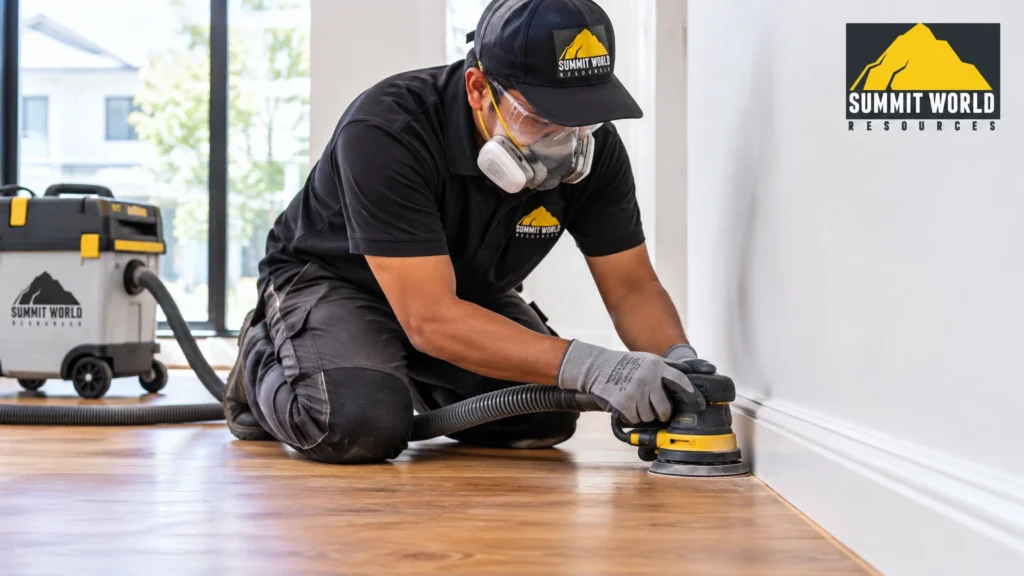
The team usually uses rotary buffing machines fitted with extra-fine sanding pads to eliminate any remaining sanding swirls. Advanced dust extraction systems remove airborne particles from walls, skirtings, and floor surfaces.
Step 6: Multi-Coat Varnish Application
Technicians apply a dedicated primer coat followed by 2 to 3 coats of commercial-grade polyurethane varnish. Each layer is allowed to dry thoroughly before light intermediate sanding ensures maximum inter-coat adhesion and crystal-clear clarity.
Selecting the Right Finish: Water-Based vs. Solvent-Based Polyurethane
A critical decision during your floor grinding & varnishing project is selecting your ideal varnish type and sheen level. The chosen protective finish determines both your floor’s long-term durability and visual tone.
1. Water-Based Polyurethane Varnish
- Color Tone: Dries completely clear, maintaining the light, natural color of your wood without artificial yellowing.
- Drying Time: Fast drying times (2 to 4 hours per coat), allowing faster project completion.
- Odor & VOCs: Low odor and minimal Volatile Organic Compounds (VOCs), making it an eco-friendly choice for indoor air quality. Homeowners prioritizing low-chemical living spaces can read our insights on eco friendly flooring in Malaysia.
- Best For: Modern light oak floors, bedrooms, and homes occupied during renovation work.
2. Solvent-Based (Oil-Based) Polyurethane Varnish
- Color Tone: Enhances wood grain with a rich amber gloss tone, deepening natural reddish hues in Merbau or Teak floors.
- Durability: Offers extreme abrasion resistance against heavy commercial foot traffic.
- Drying Time: Slower drying times (8 to 12 hours per coat).
- Best For: Heavy-traffic living areas, commercial venues, and vintage parquet restorations.
Comparison Table: Restoration vs. Replacement
To help you compare your financial and practical choices, the table below highlights key metrics between undertaking floor grinding & varnishing versus executing a complete flooring replacement.
| Performance Metric | Professional Floor Grinding & Varnishing | Complete Floor Demolition & Replacement |
| Typical Cost Investment | Highly Cost-Effective (Save up to 60%) | High Material & Demolition Costs |
| Project Completion Time | Typically 2 to 4 Days | Usually 7 to 14 Days |
| Demolition Waste & Noise | Zero Waste (Dust-Controlled Sanding) | Heavy Concrete & Tile Rubble |
| Preservation of Real Wood | 99.99% Retains Authentic Hardwood | Replaces Real Wood with New Products |
| JMB / Condominium Approval | Easy (Low Noise & Dust) | Complex (Demolition Permits Required) |
| Lifespan Extension | Adds 10 to 15+ Years of New Life | Resets Lifespan Completely |
The Environmental and Financial Advantages of Restoration
Choosing professional floor grinding & varnishing is not just a smart design decision; it represents a highly responsible financial and ecological choice.
1. Save Thousands of Ringgit
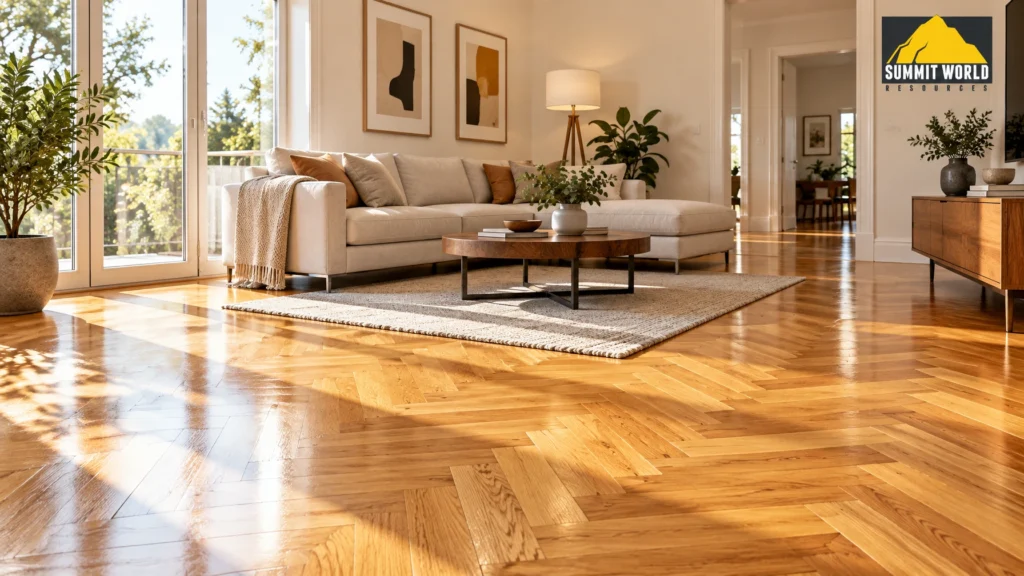
Complete floor removal involves demolition labor fees, rubbish truck rentals, subfloor screeding costs, and purchasing new surface materials. Undertaking floor grinding & varnishing costs a fraction of full replacement, leaving extra budget for furniture or repainting.
2. Protect Mature Timber Resources
Restoring your existing wood floor means no additional mature hardwood trees need to be cut down. You preserve natural resources while enjoying pristine floors.
3. Avoid Construction Landfill Rubble
Demolition produces tons of non-biodegradable construction waste. Refinishing existing timber keeps waste out of local landfills. Homeowners exploring low-waste renovation strategies can also review our guide on zero hacking flooring Malaysia for high-rise condos.
Simple Maintenance Tips After Floor Grinding & Varnishing
Once your floor grinding & varnishing project is complete, following proper care guidelines will keep your restored floors glowing for a decade or more.
- Observe Proper Curing Times: Avoid walking on freshly varnished floors for at least 24 hours. Wait 5 to 7 days before moving heavy furniture back into position.
- Attach Felt Pads to Furniture Legs: Place soft felt protector pads beneath sofa legs, dining chairs, and tables to prevent dragging scratches.
- Avoid Harsh Chemical Cleaners: Clean your floor using a soft broom or vacuum with a brush head. Wipe surfaces using a damp microfiber mop and mild, pH-neutral wood cleaners. Never use steam mops or harsh bleach.
- Use Entrance Matting: Place quality door mats at home entrances to catch grit, sand, and tiny stones carried on footwear.
Why Choose Summit World Resources Flooring for Floor Grinding & Varnishing?
Floor restoration requires experienced craftsmen who understand how different wood species react to sanding machinery and varnish sealers. Incorrect machine handling can gouge deep grooves into natural wood, causing permanent damage.
Based in Subang Jaya, Selangor, Summit World Resources Flooring (SWHOM SDN BHD) is recognized as one of Malaysia’s foremost timber and wooden flooring specialists. With over 15 years of industry experience, our restoration crews have revived thousands of parquet and solid timber floors across residential and commercial properties nationwide.
Here is why property owners consistently trust Summit World for floor grinding & varnishing:
- Proven Restoration Track Record: Over 2.5 million square feet of wood floors installed, restored, and maintained across Malaysia.
- Advanced Dust-Controlled Equipment: We utilize commercial-grade dust-extraction sanding units that minimize indoor dust, keeping your walls and living spaces clean.
- Premium Coating Systems: We use high-performance polyurethane sealers engineered for high durability, chemical resistance, and non-yellowing clarity.
- Award-Winning Industry Recognition: Winner of the Brand Leadership Flooring Solutions Award 2026, the Reader’s Digest Trusted Brand Gold Winner 2024, and voted Best Timber Flooring Specialist by APAC Insider.
- 5-Star Rated Service: Over 700 verified 5-star Google reviews praising our punctuality, rapid turnaround times, flawless finishes, and clean handovers.
Bring Your Timber Floors Back to Life Today
Do not give up on your worn, scratched, or faded hardwood floors. With professional floor grinding & varnishing, your original timber surfaces can look brand new again at a fraction of replacement cost.
Homeowners planning a complete renovation can browse our full range of flooring products and services or read our guide on planning a successful wooden flooring home makeover.
Experience our work firsthand by visiting the Summit World Resources Flooring showroom inside The Summit USJ Mall in Subang Jaya, Selangor. Inspect physical varnish samples, discuss sheen options, and consult directly with our restoration experts.
Frequently Asked Questions (FAQs)
1. How long does the floor grinding & varnishing process take?
For a standard residential area of 800 to 1,200 square feet, professional floor grinding & varnishing typically takes days to complete after everything is finalized, including drying times between varnish coats.
2. Is floor grinding & varnishing extremely dusty?
Traditional sanding methods produced heavy dust. However, competent providers such as Team Summit World utilize modern dust-extraction sanding machinery that traps up to 90% of airborne particles, keeping your property clean throughout the project.
3. How many times can a solid timber or parquet floor be ground and varnished?
Solid hardwood and vintage parquet floors can typically undergo full floor grinding & varnishing 4 to 6 times over their lifespan. Because each sanding pass removes less than 1 millimeter of wood, your floor can last for generations.
4. Can deep water stains or dark pet marks be removed by floor grinding?
Most surface stains and light liquid marks are completely ground out during the coarse sanding phase. If water has penetrated extremely deep into the wood grain, technicians can replace individual damaged parquet blocks before grinding and varnishing the entire surface.
5. What is the difference between matte, satin, and gloss varnish finishes?
A gloss finish creates a shiny, reflective surface that highlights wood luxury but shows fine dust easily. A matte finish delivers a flat, contemporary, natural look that hides scratches well. A satin finish offers the ideal middle ground, providing a subtle sheen with easy daily maintenance. For further maintenance insights, explore our comprehensive flooring FAQs knowledge base.